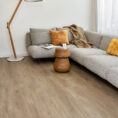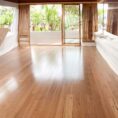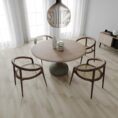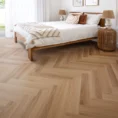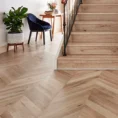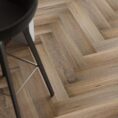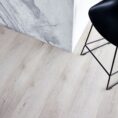


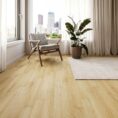





Laminate flooring has become one of the most widely installed hard-flooring solutions in Australia over the past two decades. Its popularity is driven by its ability to deliver the visual appeal of timber flooring while remaining significantly more affordable, easier to install, and simpler to maintain than natural wood alternatives.Despite its popularity, laminate flooring is often misunderstood. Some homeowners assume it behaves like solid timber, while others expect it to be completely waterproof. These misconceptions frequently lead to poor flooring choices.
This guide explains what laminate flooring is, how it is made, and the real-world pros and cons of laminate flooring in Australian homes.
Laminate flooring is a manufactured flooring product made from multiple bonded layers that work together to create a durable, decorative surface. It is designed to replicate the appearance of timber, stone, or tile without using natural materials on the surface layer.
Unlike solid or engineered timber flooring, laminate flooring does not contain real wood on its top surface. Instead, it uses high-resolution photographic imagery protected by a clear wear layer. The goal of laminate flooring is visual realism combined with improved resistance to scratching, fading, and everyday wear.

Laminate flooring is composed of four primary layers, each contributing to its overall performance. The top layer is a transparent wear layer, usually made from aluminium oxide or melamine resin. This layer protects the floor from scratches, stains, and UV fading. The thickness and quality of this layer largely determine how long the floor will last.
Below the wear layer is the decorative layer. This is a high-definition printed image that recreates the look of naturalmaterials such as oak, blackbutt, or stone. Modern laminate flooring often uses embossed textures that align with the printed grain for a more realistic finish.
The core layer is made from high-density fibreboard (HDF). This layer provides structural strength and impact resistance.However, it is also the most vulnerable part of laminate flooring, as it can swell if exposed to moisture.
The bottom layer is a stabilising backing layer that helps prevent warping and adds balance to the plank. It also offers limited moisture resistance from below.
In Australian homes, laminate flooring is most often installed in living rooms, bedrooms, hallways, studies, and apartments. It performs best in dry, climate-controlled areas and is frequently chosen for renovations where budget and installation speed are important considerations.
Laminate flooring is generally not recommended for bathrooms, laundries, or other wet areas unless a specialised water-resistant product is used and installed with strict moisture control.

One of the most appealing advantages of laminate flooring is its affordability. Compared to solid timber or engineered timber flooring, laminate delivers a similar visual effect at a significantly lower cost. This makes it accessible to a wider range of homeowners and ideal for large floor areas.
Laminate flooring is also highly resistant to surface wear. Its protective wear layer allows it to withstand daily foot traffic, pet claws, furniture movement, and minor impacts. In many cases, laminate flooring resists scratching better than natural timber.
Installation is another key advantage. Laminate flooring typically uses a floating click-lock system, allowing it to be installed quickly without nails or glue. This reduces labour costs and makes it suitable for installation over existing floors, provided the subfloor is level.
Maintenance requirements are minimal. Laminate flooring does not require sanding, polishing, oiling, or sealing. Routine cleaning with sweeping, vacuuming, and occasional damp mopping is usually sufficient.
Because laminate flooring is manufactured, it offers consistent colour and pattern across all boards. This uniformity is often preferred in modern interiors where a clean, controlled appearance is desired.
The most significant limitation of laminate flooring is its sensitivity to moisture. While the surface layer can resist minor spills, laminate flooring is not waterproof. If water penetrates the joints and reaches the fibreboard core, swelling and edge lifting can occur. Once damaged, affected boards must be replaced.
Another drawback is that laminate flooring cannot be refinished. Unlike timber floors, which can be sanded and restored, laminate flooring has a fixed lifespan. When the wear layer is worn through or damaged, replacement is the only solution.
Laminate flooring can also feel harder and less natural underfoot compared to timber. Acoustic performance depends heavily on the quality of underlay used. Poor underlay can result in a hollow or noisy floor, particularly in apartments.
From a resale perspective, laminate flooring is generally considered a mid-range flooring option. While it improves visual appeal, it does not add the same perceived value as solid or engineered timber flooring.
| Aspect | Advantages | Disadvantages |
|---|---|---|
| Cost | More affordable than timber flooring | Lower perceived value |
| Appearance | Realistic timber visuals | Repeating grain patterns |
| Durability | Scratch and fade resistant | Cannot be refinished |
| Water Resistance | Handles minor spills | Susceptible to moisture damage |
| Installation | Fast floating installation | Requires flat subfloor |
| Maintenance | Very low ongoing care | Damaged boards must be replaced |

Laminate flooring performs well in many Australian homes, particularly in dry climates and properties with stable indoor temperatures. It is commonly used in metropolitan areas, apartments, and family homes where ease of maintenance is a priority. In coastal or high-humidity regions, correct installation is critical. Moisture barriers, quality underlay, and proper expansion gaps are essential to ensure long-term performance. To explore laminate flooring options or get professional advice, visit Arta Floor
When compared to engineered timber flooring, laminate is more affordable and easier to maintain, but it lacks the natural warmth and refinishing potential of real wood. Compared to hybrid flooring, laminate offers better scratch resistance at a lower price, but it does not provide full waterproof protection.Against vinyl flooring, laminate typically offers a more realistic timber appearance, while vinyl performs better in wet areas and provides improved acoustic comfort.
The performance of laminate flooring is heavily influenced by installation quality. The subfloor must be level, dry, and clean. Expansion gaps must be left around the perimeter to allow for natural movement, and moisture barriers should be used where required. For professional installation advice or quotations, contact Contact Us
For manufacturer specifications and technical details, refer to
preference
What is laminate flooring made of?
Laminate flooring is made from a layered structure consisting of a protective wear layer, a photographic design layer, a high-density fibreboard core, and a stabilising backing layer.
Is laminate flooring waterproof?
Laminate flooring is not waterproof. Some products are water-resistant, but prolonged exposure to moisture can still cause damage.
Is laminate flooring suitable for pets?
Yes. Laminate flooring is scratch-resistant and easy to clean, making it suitable for homes with pets.
How long does laminate flooring last?
Depending on quality, usage, and maintenance, laminate flooring typically lasts between 10 and 25 years.
Laminate flooring is a practical, cost-effective flooring solution that delivers strong visual appeal, durability, and low maintenance. When installed in appropriate areas and maintained correctly, it performs reliably in many Australian homes.Understanding the true pros and cons of laminate flooring allows homeowners to make informed decisions. For dry living areas and budget-conscious renovations, laminate flooring remains one of the most sensible flooring choices available.