







Lately, we’ve been getting a question over and over again:
“Can I install hybrid flooring over my existing tiles?”
Installing hybrid flooring over tiles is a very popular renovation method in Melbourne homes. The answer is a confident yes — however, as with any flooring installation, there are important technical steps you must follow to make sure the result is smooth, stable, and durable. Although hybrid flooring over tiles can deliver a modern high-end finish without removing the original surface, the key to success lies in preparation. When you understand how hybrid flooring behaves and how tiled surfaces interact with floating floors, the entire process becomes much simpler.
This comprehensive guide explains everything you must know before installing hybrid flooring over tiles, including levelling, moisture testing, expansion gaps, height adjustments, and long-term performance considerations. We will walk through the process as if we are simply sitting down over coffee, breaking down each step in practical, clear, and easy-to-apply language. The goal is to help you make a confident, informed decision and achieve professional-quality results that last for decades.
Hybrid flooring has become a favourite in Melbourne renovations because it blends strength, aesthetics, and practicality. It is durable, water-resistant, extremely stable under changing temperatures, and available in hundreds of timber-inspired designs. Moreover, hybrid flooring is known for its click-lock floating system, which means installation is generally fast, clean, and glue-free. This design makes hybrid flooring over tiles even more accessible and appealing for homeowners.
Another major advantage is that hybrid planks almost always include an attached acoustic underlay. Because of this, installers rarely need to add extra materials beneath the floor, which reduces overall renovation time and cost. Additionally, because you can install hybrid flooring over tiles without demolition, you avoid dust, disposal fees, and noisy jackhammering.
However, even though hybrid flooring over tiles is possible in many homes, not every tiled floor is ready for installation. Tiles can be uneven, hollow, cracked, or unstable. Therefore, understanding how tiles behave beneath a floating floor is crucial. Before you begin your project, you must assess moisture, height, structural stability, and overall flatness. When these factors are properly addressed, hybrid flooring delivers exceptional performance and a beautiful finish.
You can successfully install hybrid flooring over:
But here is the most important detail:
Just because you can install hybrid flooring over tiles does not mean your current tiled floor is automatically suitable. Every surface behaves differently, and even minor imperfections can impact the performance of floating flooring systems. Stability is everything.
A well-prepared subfloor ensures your hybrid planks lock cleanly, stay secure underfoot, and maintain their structural integrity over the long term. Conversely, installing hybrid flooring over tiles without adequate preparation may lead to clicking sounds, movement, or premature wear.
Below are the four essential checks you must complete before installing hybrid flooring over tiles. Understanding each of these steps will help you avoid future issues and maximise the lifespan of your new floor.
1. The Surface Has to Be Level
A perfectly flat subfloor is arguably the most important requirement for hybrid flooring. Hybrid planks have a rigid core, and even a small variation in the surface below them can cause movement, lifting, noise, or gaps. When installing hybrid flooring over tiles, uneven grout lines, lippage between tiles, or general surface inconsistencies can disrupt the locking mechanism.
Professional installers typically use a high-quality self-levelling compound to smooth out the tiled surface. This material fills dips, covers tile edges, and creates a solid, uniform base. Yet levelling is not something that should be rushed. The compound must dry fully before hybrid flooring is installed. If moisture from the compound becomes trapped under hybrid planks, the tiles may loosen, and the hybrid boards may develop hollow spots.
A properly levelled floor enhances comfort, reduces sound transmission, and ensures each plank locks precisely as intended. When hybrid flooring over tiles is installed on a well-prepared base, the finish feels firm, premium, and seamless.
2. Moisture Matters
Many homeowners assume that because hybrid floors are water-resistant, moisture beneath them is harmless. This is not true. Moisture beneath hybrid flooring — especially when installing hybrid flooring over tiles — can cause mould growth, subfloor degradation, swelling, and long-term structural issues.
Tiles installed on concrete slabs can hold moisture, especially in older homes where waterproofing is minimal or non-existent. Therefore, a moisture test is mandatory. Professional installers use moisture meters and thermal tools to identify hidden issues such as rising damp, leaks, or trapped humidity.
Excess moisture may indicate:
Therefore, always allow the floor to reach safe moisture levels before installing hybrid flooring over tiles. A small delay in drying time can prevent expensive problems later.
3. You’re Adding Height
Because hybrid planks float above the current surface, installing hybrid flooring over tiles will raise your floor level slightly. The increase is usually 4–7 mm depending on the hybrid product and underlay thickness. Although this sounds minor, it can cause functional issues if not considered beforehand.
When the floor height changes, the following may require adjustment:
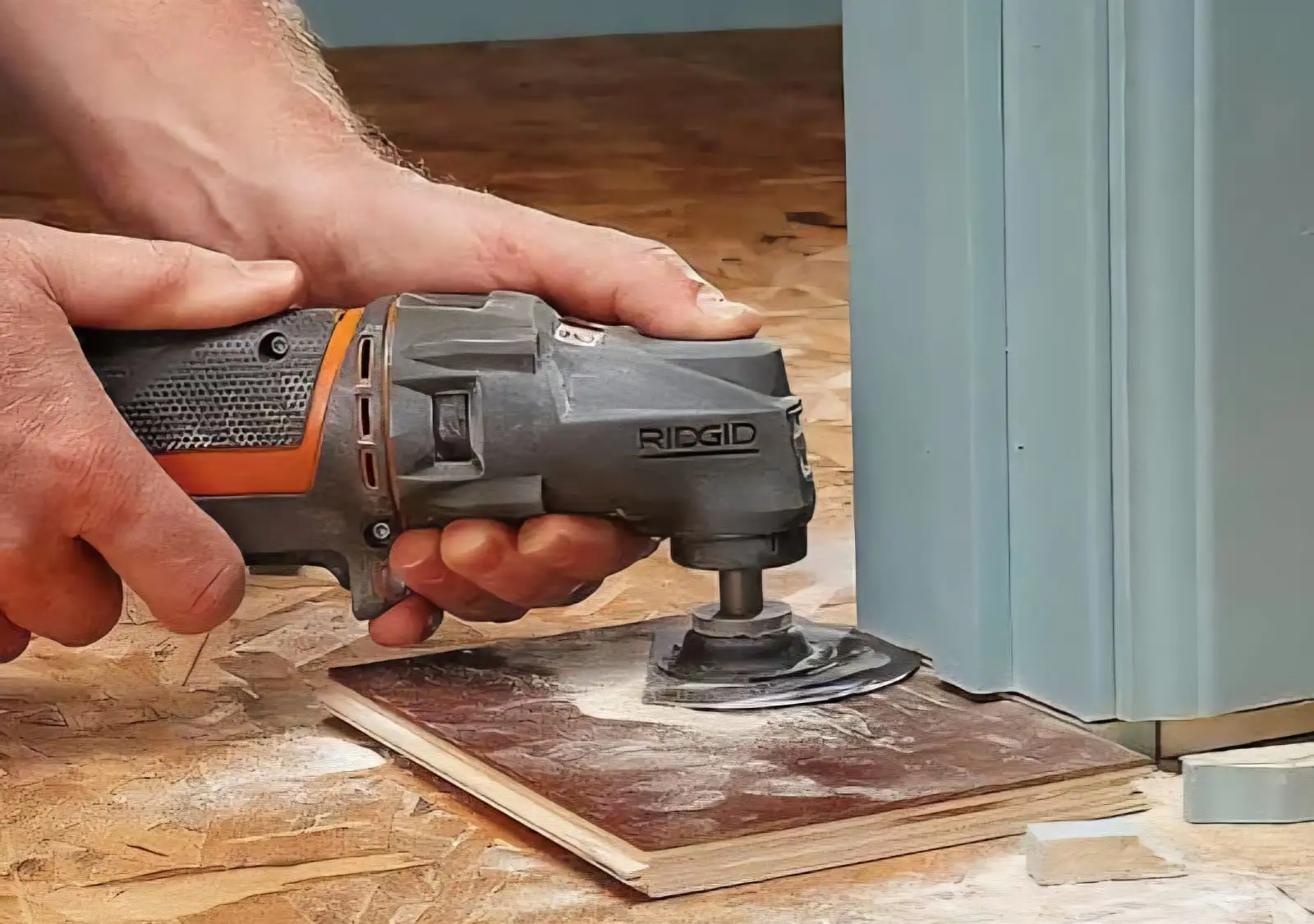
Door trimming is the most common modification. Installers use a multi-tool or specialised saw to cut the door base cleanly. If your project involves kitchen appliances or built-in cabinetry, measuring their clearance before installing hybrid flooring over tiles is essential.
4. Expansion Gaps Are Non-Negotible
Hybrid flooring expands and contracts naturally with temperature and humidity changes. This is why professional installers always leave a perimeter expansion gap around all fixed objects. When installing hybrid flooring over tiles, this gap becomes even more important because tiles do not absorb moisture or movement. If hybrid planks are installed tightly against walls or cabinets without a buffer zone, they can lift, buckle, or push outward.
Expansion gaps should be placed around:
These gaps are later covered with skirting or scotia for a clean finish.
Can I DIY install it over tiles?
Yes — installing hybrid flooring over tiles is one of the most DIY-friendly flooring upgrades. However, the preparation stage must be precise. Levelling and moisture testing are areas where many DIY installations go wrong. A flat, dry, clean surface is the foundation of a long-lasting hybrid installation, so if you are unsure, consult a professional.
Do I need to remove skirting boards?
You can leave skirting boards in place if you prefer, and simply install scotia to cover the expansion gap. Removing skirting boards creates a cleaner final look, but both options are acceptable. When installing hybrid flooring over tiles, many homeowners choose scotia to keep the process fast and minimally invasive.
What if my tiles are cracked or loose?
Do not install hybrid flooring over tiles that are unstable. Cracks and loose tiles suggest movement or adhesive failure below the surface. If the tiles shift, the hybrid flooring will move with them, causing noise and misalignment. Always repair or replace problematic tiles before installation.
Before making any flooring decision, a professional site inspection is essential. At Arta Floor, we offer free inspections throughout Melbourne to help you determine whether installing hybrid flooring over tiles is the right choice for your home. A trained technician will assess:
A site check protects your investment and ensures your installation meets Australian flooring standards.
Installing hybrid flooring over tiles is not only possible — it has become one of Melbourne’s most effective, low-disruption renovation strategies. When the tiled surface is properly inspected, levelled, dried, and confirmed as structurally sound, hybrid flooring delivers a premium finish that rivals full-scale demolition projects without the associated cost, noise, or downtime. The true success of this method lies in understanding how floating floors interact with existing substrates. With the correct preparation, hybrid planks lock firmly, sit comfortably underfoot, and maintain their visual integrity for decades.
As more homeowners seek durable, water-resistant flooring solutions, hybrid products continue to evolve with stronger core materials, enhanced acoustic layers, and more authentic timber textures. Reviewing high-quality product lines — such as those offered by Preference Floors — can help you compare wear layers, stability ratings, and colour ranges. This ensures you select a hybrid floor that not only looks exceptional but also performs reliably in long-term residential conditions. High-performance hybrid flooring paired with a stable tiled base creates a renovation outcome that is both visually refined and structurally dependable.
Additionally, a professional site inspection remains one of the smartest steps you can take before installation. Understanding tile condition, moisture levels, door clearances, and levelling requirements protects your investment and prevents future maintenance issues. Once these factors are addressed, installing hybrid flooring over tiles becomes a streamlined, highly effective way to modernise interiors, improve property value, and enhance overall comfort.
If you are ready to explore design options or want to see how hybrid flooring performs in real-life Melbourne renovations, visit our Hybrid Flooring page for product insights and installation guidance. You can also browse our Project Gallery to view completed transformations and gather inspiration for your home.
Ultimately, when executed with care and supported by high-quality materials, installing hybrid flooring over tiles offers a long-lasting, stylish, and efficient renovation pathway — allowing you to elevate your space with confidence, precision, and outstanding results.