






Engineered timber flooring is known for its stability, elegant appearance, and long-lasting performance. But one question almost every homeowner eventually asks is the same: can Engineered Flooring be sanded? The short answer is: yes — but only under the right conditions.
Unlike solid timber, engineered flooring contains a layered construction where only the top wear layer can be sanded. Because this layer varies in thickness from one product to another, some engineered floors can be sanded several times, while others may only handle a light refinishing — or none at all.
In this guide created specifically for Melbourne homeowners, Arta Floor explains how sanding works, when it’s safe, what to check before starting, and whether your floor qualifies. You’ll also learn how to assess wear layer thickness, what refinishing options exist, and what to expect from the process.
Understanding the structure of engineered timber flooring is the key to knowing whether sanding is possible. Engineered boards consist of:
The strength of the core provides stability, but it’s the wear layer thickness that determines how deeply sanding can be done.

The wear layer is the top real-timber portion of engineered flooring. Its thickness directly influences sanding safety:
The important part is accuracy. Even a difference of 0.5 mm can change whether your floor is safe to sand.
After years of use, your flooring may show wear that sanding can correct. Common signs include:
However, deep gouges, structural damage, or severe water issues cannot be resolved by sanding and require a different repair approach.

Yes — you can sand engineered wood flooring, but it must be done with professional assessment. Not all boards are suited to sanding, and attempting it on a thin wear layer can permanently damage the floor. Melbourne homeowners often assume engineered floors behave like solid timber, but this is only true when the wear layer is thick enough.
Before any refinishing attempt, always verify:
Here are simple methods Melbourne homeowners commonly use:
Looking at the board’s exposed edge gives a direct view of the wear layer.
Most engineered floors list wear layer thickness in millimetres.
If you kept spare boards from installation, check their cross-section.
This is the most accurate method, especially for older floors.
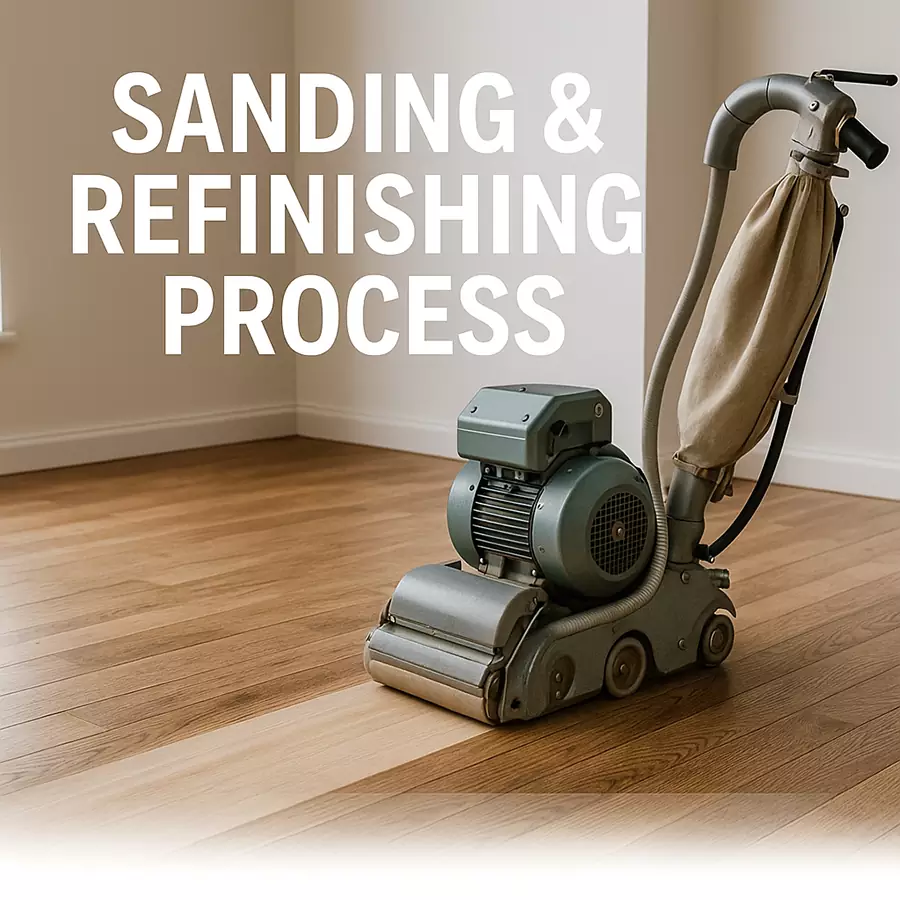
Sanding engineered timber is a controlled and delicate process. Because only the wear layer can be sanded, professionals use:
Well-executed sanding removes the top damaged layer while keeping the structural layers untouched.
Not all engineered floors require heavy sanding. Sometimes a buff-and-coat is enough:
Thicker wear layers give you more refinishing options.
You can sand and refinish engineered flooring if:
You should avoid sanding if:
To ensure safety and longevity, avoid these frequent errors:
Having the correct knowledge prevents irreversible damage.
| Wear Layer Thickness | Sandable? | Recommended Process | Typical Outcome |
| < 1 mm | No | None | At-risk surface |
| 1–2 mm | Limited | Light buffing | Refreshes finish |
| 2–3 mm | Yes | One full sanding | Restored surface |
| 4–6 mm | Yes | Multiple sandings | Long-term refinishing options |
This depends entirely on wear layer thickness. As a general rule:
Melbourne’s climate is generally friendly to engineered timber, helping floors maintain stability for refinishing when done correctly.
Sanding engineered floors often produces dramatic visual improvements:
Refinishing can completely change the tone, giving your home a new visual identity.
Not always. Safety depends on:
If the engineered boards have significant movement or moisture expansion, sanding is not recommended.
Some floors can — particularly those with a thick wear layer. However, Melbourne homeowners should always check product details, as some modern engineered ranges are specifically designed to handle multiple refinishes, while others prioritise thin profiles for budget designs.
Yes, as long as moisture levels are stable and the wear layer is thick enough.
Yes — sanding is one of the most effective ways to remove UV discoloration.
Light scratches may only require buffing; deeper marks might need sanding depending on wear layer depth.
Modern dust-control systems significantly reduce airborne dust.
Minor surface-level stains may be fixable, but structural swelling cannot be repaired through sanding.
If you’re planning a refinishing project, Arta Floor provides expert guidance, product insights, and support to help you understand your engineered flooring’s capabilities. Whether you’re exploring sanding options or planning long-term maintenance, you can make informed decisions with confidence.