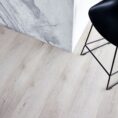

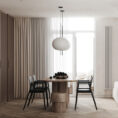
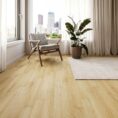




Your laundry is one of the wettest rooms in the house, yet it is often the most neglected when it comes to flooring choices. Choosing the best flooring for laundry rooms in Australia means prioritising waterproof performance above all else — because washing machine leaks, splashes from the sink, and wet clothes dripping onto the floor are daily realities, not rare accidents.
In 2026, Australian homeowners have two standout options for laundry flooring: SPC hybrid flooring and porcelain tiles. Both are 100% waterproof, durable, and easy to maintain — but they differ significantly in cost, comfort, installation complexity, and visual appeal.
This guide compares every flooring type suitable for laundry rooms, explains what to avoid, and gives you a clear recommendation based on your budget and priorities.
| Flooring Type | Waterproof | Comfort | Cost (Installed/m²) | Maintenance | Verdict |
|---|---|---|---|---|---|
| SPC Hybrid | 100% waterproof | Warm, comfortable | $55 – $95 | Very Low | Best overall |
| Porcelain Tiles | 100% waterproof | Cold, hard | $80 – $150 | Low (grout maintenance) | Best for heavy-duty wet areas |
| WPC Hybrid | 100% waterproof | Very comfortable | $75 – $120 | Very Low | Premium comfort option |
| Vinyl Plank | Water-resistant | Comfortable | $40 – $70 | Low | Budget option |
| Laminate | Not waterproof | Comfortable | $45 – $85 | Low | Not recommended |
| Carpet | Not waterproof | Soft | $40 – $80 | High | Never use in laundry |
Unlike a kitchen where water exposure is mostly surface splashes, a laundry faces serious water risks on a daily basis:
Non-waterproof flooring like laminate, solid timber, or carpet will swell, warp, or grow mould when exposed to this level of moisture. For your laundry, waterproof is not optional — it is essential. For more on waterproof flooring performance, read our detailed guide on whether hybrid flooring is truly waterproof.
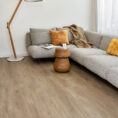
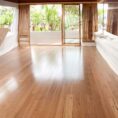
SPC (Stone Polymer Composite) hybrid flooring is the top recommendation for Australian laundry rooms in 2026. Its rigid limestone-based core is completely impervious to water — not just water-resistant, but genuinely 100% waterproof at the molecular level. Water cannot penetrate, swell, or damage the core no matter how long it sits on the surface.
Why SPC is ideal for laundries:
SPC hybrid also allows you to extend the same flooring from your kitchen and hallway into the laundry, creating a seamless visual flow throughout the home. For a detailed comparison of SPC cores versus other options, see our SPC vs WPC flooring guide.
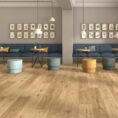
Porcelain tiles are the traditional choice for wet areas and remain an excellent option for laundries. They are virtually indestructible, fully waterproof (with properly sealed grout), and available in a huge range of designs including timber-look porcelain that mimics the appearance of real wood.
Tile advantages for laundry:
Tile disadvantages for laundry:
WPC (Wood Polymer Composite) hybrid flooring is also 100% waterproof and suitable for laundry rooms. Its foamed core provides superior comfort and sound absorption compared to SPC, making it a great choice if your laundry doubles as a utility room where you spend time folding, ironing, or doing other tasks.
The trade-off is that WPC costs 20–30% more than SPC and its softer core is slightly less resistant to heavy point loads from washing machines. If you choose WPC for your laundry, place protective pads under appliance feet to distribute the weight. Learn more about WPC versus SPC in our detailed comparison guide.
Glue-down vinyl plank is a budget-friendly water-resistant option for laundries. It is thinner, more flexible, and less durable than SPC hybrid, but at $40–$70/m² installed it suits renovations on a tight budget. Be aware that standard vinyl plank is water-resistant rather than water-proof — prolonged standing water can seep between planks and damage the subfloor beneath. For true waterproof protection, SPC hybrid is the better investment.
Laminate flooring uses an HDF (High-Density Fibreboard) core that absorbs water and swells irreversibly. Even “water-resistant” laminate is only designed to handle brief surface splashes — not the sustained moisture exposure a laundry produces. A single washing machine leak can destroy an entire laminate floor within hours. Never install standard laminate in a laundry.
Solid timber is highly susceptible to moisture damage. It swells, cups, warps, and develops mould in wet environments. The cost of repairing water-damaged hardwood far exceeds the cost of installing waterproof flooring from the start. If you want a timber look in your laundry, use SPC hybrid with a realistic timber-print design layer.
Carpet in a laundry is a recipe for mould, mildew, and odour problems. It absorbs moisture, takes hours to dry, and creates an unhygienic environment. There is no scenario where carpet is appropriate for a laundry room.
| Factor | SPC Hybrid | Porcelain Tiles |
|---|---|---|
| Waterproof | 100% — core level | 100% — tile level (grout needs sealing) |
| Comfort | Warm, slight cushion | Cold, hard |
| Cost (installed/m²) | $55 – $95 | $80 – $150 |
| Installation time | 1 day (floating click-lock) | 2–3 days (adhesive + grouting + curing) |
| Install over existing floor | Yes — over tiles, concrete, vinyl | Sometimes — depends on condition |
| Grout maintenance | None | Regular cleaning, periodic resealing |
| Slip resistance (wet) | Good (EIR textures) | Varies — must choose anti-slip rated |
| Repair | Replace individual plank | Chip out and re-tile (difficult) |
| Lifespan | 15 – 25 years | 25+ years |
| Aesthetics | Realistic timber or stone look | Widest design range |
Verdict: For most Australian laundries, SPC hybrid flooring offers the best value. It is cheaper, warmer, faster to install, requires no grout maintenance, and provides genuine waterproof protection. Tiles win on absolute longevity and are the better choice for commercial laundries or where fire resistance near hot water systems is a concern.
Australian building codes require a waterproofing membrane beneath flooring in wet areas. For tiles, this is applied as a liquid membrane before tiling. For SPC hybrid floating floors, the membrane is applied to the subfloor surface — the SPC planks then float above it. Always ensure your installer follows AS 3740 waterproofing standards.
The subfloor must be level within 3mm over 2 metres for both hybrid and tile installation. In laundries, also check for:
If installing SPC hybrid, maintain 8–10mm expansion gaps around the perimeter and all fixed objects, including washing machine and dryer positions. These gaps are hidden by skirting boards and silicone trim. For more on installation requirements, read our hybrid flooring installation rules guide.
A typical Australian laundry is 4–8m². Here are the expected costs for each option:
| Flooring Type | Cost per m² (installed) | Small Laundry (4m²) | Large Laundry (8m²) |
|---|---|---|---|
| SPC Hybrid | $55 – $95 | $220 – $380 | $440 – $760 |
| WPC Hybrid | $75 – $120 | $300 – $480 | $600 – $960 |
| Porcelain Tiles | $80 – $150 | $320 – $600 | $640 – $1,200 |
| Vinyl Plank | $40 – $70 | $160 – $280 | $320 – $560 |
For comprehensive flooring pricing across all rooms, see our hybrid flooring cost guide.
Regardless of which flooring you choose, these maintenance practices will extend its life in a wet laundry environment:
At Arta Floor, we recommend SPC hybrid flooring as the best flooring for laundry rooms in Australian homes. It delivers genuine 100% waterproof protection at a lower cost than tiles, installs in hours rather than days, feels warm and comfortable underfoot, and requires zero grout maintenance.
For a seamless look, extend the same SPC hybrid product from your kitchen and hallway into the laundry — creating a unified, waterproof floor throughout your home’s high-moisture zones.
Browse our full hybrid flooring collection or request a free measure and quote for your laundry renovation.
Yes. SPC and WPC hybrid flooring are both 100% waterproof and fully suitable for laundry rooms. SPC is the preferred option due to its denser, more impact-resistant core. Ensure the subfloor has proper waterproofing membrane as required by Australian building codes (AS 3740) and maintain expansion gaps around all edges.
No. Standard laminate flooring is not waterproof — its HDF core absorbs water and swells irreversibly. Even “water-resistant” laminate is only designed for brief surface splashes, not the sustained moisture exposure in a laundry. A single washing machine leak can destroy an entire laminate floor. Use SPC hybrid or tiles instead.
Vinyl plank (glue-down) is the cheapest at $40–$70/m² installed, but it is only water-resistant, not truly waterproof. For genuine waterproof protection, SPC hybrid flooring at $55–$95/m² is the most affordable option. For a small 4m² laundry, SPC costs as little as $220 fully installed.
For most Australian laundries, SPC hybrid flooring is the better choice. It costs less, installs faster, feels warmer underfoot, and requires no grout maintenance. Tiles have a longer lifespan (25+ years vs 15–25 years) and are better for heavy commercial use, but the cost and comfort advantages of SPC make it the smarter choice for residential laundries.
Yes. SPC hybrid flooring is 100% waterproof at the core level — water cannot penetrate or damage the limestone-PVC composite. If your washing machine leaks, the flooring itself will not be damaged. However, you should still clean up standing water promptly to protect the subfloor beneath the floating floor and prevent water from seeping under skirting boards into adjacent rooms.
Yes. Australian building standards (AS 3740) require a waterproofing membrane in wet areas including laundries. Even though SPC hybrid is waterproof, the membrane protects the subfloor structure beneath. Your installer should apply a liquid waterproofing membrane to the subfloor before laying the hybrid flooring as a floating floor above it. See our bathroom flooring guide for more on wet-area waterproofing requirements.