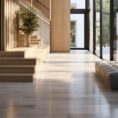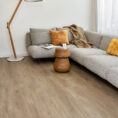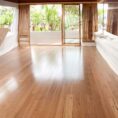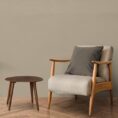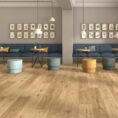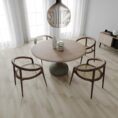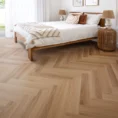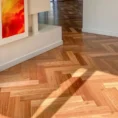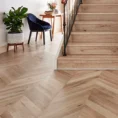
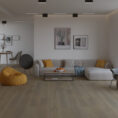
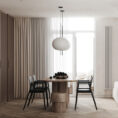
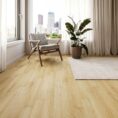





Hybrid flooring has emerged as one of the most discussed flooring solutions in the Australian market. Its rapid adoption across residential renovations, apartments, and new builds has been driven by promises of durability, waterproof performance, and visual appeal. However, understanding the true hybrid flooring pros and cons requires a deeper, more technical evaluation than most surface-level guides provide.
Australian homes face unique challenges—ranging from fluctuating temperatures and high UV exposure to moisture-prone living spaces and open-plan designs. This guide delivers a comprehensive, non-promotional analysis to help homeowners, builders, and investors assess whether hybrid flooring is genuinely suitable for long-term use.
Hybrid flooring is a rigid floating floor system engineered by combining multiple materials into a single plank. Unlike traditional laminate or vinyl flooring, hybrid planks are designed to provide structural stability while maintaining full moisture resistance.
Most hybrid flooring products consist of four core layers:
This layered system is central to both the advantages and limitations discussed throughout this hybrid flooring pros and cons guide.
Hybrid flooring aligns well with modern Australian living patterns. Open-plan layouts, indoor–outdoor flow, and an emphasis on low-maintenance materials have all contributed to its popularity. Additionally, hybrid flooring performs reliably in areas where traditional laminate often fails, particularly in kitchens and laundries.
Australian homeowners are increasingly choosing hybrid flooring because it offers a balance between performance and affordability without requiring extensive ongoing maintenance.

One of the most significant hybrid flooring pros is its fully waterproof core. Unlike laminate flooring, which is highly susceptible to swelling when exposed to moisture, hybrid flooring maintains structural integrity even in damp environments.
This makes hybrid flooring suitable for kitchens, laundries, hallways, and ground-floor installations over concrete slabs—areas commonly found in Australian homes.
Hybrid flooring is engineered to withstand heavy foot traffic, furniture weight, and daily household wear. The rigid core provides resistance to dents and compression marks that often appear in softer vinyl products.
For families with children or pets, this durability significantly extends the usable lifespan of the floor.
Australian temperature variations can cause expansion and contraction in many flooring materials. Hybrid flooring offers excellent dimensional stability, reducing the risk of warping, gapping, or buckling over time.
This stability makes it suitable for homes without full climate control or properties exposed to seasonal temperature changes.
Most hybrid flooring systems use a click-lock floating installation method. This allows planks to be installed over existing surfaces such as tiles or timber, provided the substrate is level.
As a result, installation times are reduced, and labour costs are often lower compared to glued or nailed flooring systems. Professional installers commonly recommend hybrid flooring for renovation projects where downtime must be minimised.
Hybrid flooring requires minimal maintenance. It does not need sanding, sealing, or polishing, and routine cleaning involves basic sweeping and damp mopping. This makes it particularly appealing for investment properties and high-traffic households.
| Key Advantage | Practical Outcome |
|---|---|
| Waterproof construction | Safe for kitchens, laundries, and concrete slabs |
| Rigid core strength | Improved resistance to dents and impact damage |
| Thermal stability | Reduced movement in Australian climate conditions |
| Floating installation | Faster installation and lower labour costs |
| Low maintenance | No refinishing or sealing required |
One of the most important hybrid flooring cons is its limited repairability. Unlike solid or engineered timber, hybrid flooring cannot be sanded or refinished. If a plank is damaged, replacing it often requires lifting multiple boards.
This limitation means that while hybrid flooring is durable, it is not designed for restoration over decades.
Despite advanced visual technology, hybrid flooring does not replicate the tactile warmth of natural timber. The rigid core can feel firmer underfoot, and acoustic performance depends heavily on subfloor preparation and underlay quality.
Prolonged exposure to direct sunlight can cause colour fading or tonal variation over time. In Australian homes with large windows, appropriate window coverings or UV-rated products are essential to minimise this risk.
Not all hybrid flooring products meet the same standards. Lower-cost options may feature thinner wear layers or inferior locking systems, leading to premature failure. This highlights the importance of sourcing products from reputable suppliers such as
established hybrid flooring specialists who understand Australian conditions.
| Limitation | Long-Term Impact |
|---|---|
| Non-refinishable surface | Damaged planks require replacement |
| Synthetic composition | Less natural feel than timber flooring |
| UV sensitivity | Potential fading in sun-exposed rooms |
| Inconsistent product quality | Low-grade products may fail early |
When assessing hybrid flooring pros and cons, it is useful to compare it directly with alternative flooring solutions commonly used in Australia.
| Performance Factor | Hybrid Flooring | Laminate Flooring |
|---|---|---|
| Water resistance | Fully waterproof | Moisture-sensitive |
| Durability | High | Moderate |
| Maintenance needs | Low | Moderate |
| Australian suitability | Very suitable | Limited in wet areas |
| Performance Factor | Hybrid Flooring | Vinyl Flooring |
|---|---|---|
| Core strength | Rigid | Flexible |
| Dent resistance | High | Lower |
| Acoustic performance | Good with underlay | Moderate |
| Cost range | Mid-range | Low to mid-range |
For many Australian households, hybrid flooring represents a strong balance between performance, aesthetics, and cost. It is particularly well suited to busy households, apartments, and investment properties where water resistance and durability are critical.
However, homeowners seeking a flooring solution that can be restored or refinished over multiple decades may find solid or engineered timber a better long-term option. Consulting professional flooring suppliers or installers via
experienced flooring specialists is recommended before making a final decision.
For broader industry insights and product specifications, independent Australian flooring resources such as
established hybrid flooring manufacturers provide useful comparative benchmarks.
Understanding the full scope of hybrid flooring pros and cons is essential before selecting it for an Australian home. While hybrid flooring excels in moisture resistance, durability, and ease of maintenance, it does have limitations related to repairability and long-term restoration.
When chosen carefully and installed correctly, hybrid flooring can be a highly practical, visually appealing solution that performs reliably in Australian conditions for many years.