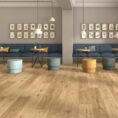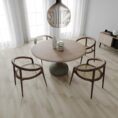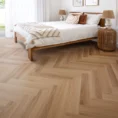




Choosing commercial flooring is a fundamentally different decision from residential flooring. In a commercial environment — whether it is an office, retail store, restaurant, or medical clinic — the floor endures hundreds or thousands of footsteps per day, rolling chair loads, trolley traffic, spills, and constant cleaning. The wrong flooring fails within years and disrupts your business during replacement.
In 2026, SPC hybrid flooring has become the dominant choice for Australian commercial spaces. Its rigid limestone core delivers the extreme durability that commercial environments demand, at a price point that makes whole-fitout projects viable. Combined with 100% waterproof performance, realistic design options, and rapid installation that minimises business downtime, SPC is the smart choice for offices, retail, hospitality, and healthcare.
This guide covers every commercial flooring option available in Australia, compares them across the metrics that matter for business owners, and provides sector-specific recommendations with real 2026 pricing.
| Flooring Type | Commercial Durability | Maintenance | Install Time | Cost (Installed/m²) | Warranty (Commercial) |
|---|---|---|---|---|---|
| SPC Hybrid | Excellent | Very Low | Fast (1–2 days/100m²) | $55 – $95 | 10 – 15 years |
| Luxury Vinyl Tile (LVT) | Very Good | Low | Moderate | $60 – $110 | 10 – 15 years |
| Porcelain Tiles | Excellent | Low (grout upkeep) | Slow (3–5 days/100m²) | $80 – $160 | 15 – 25 years |
| Polished Concrete | Excellent | Very Low | Slow (grinding + sealing) | $50 – $100 | 20+ years |
| Carpet Tiles | Good | Moderate | Fast | $45 – $90 | 5 – 10 years |
| Engineered Timber | Moderate | Moderate | Moderate | $90 – $160 | 5 – 10 years |
| Epoxy / Resin | Excellent | Very Low | Slow (curing time) | $80 – $150 | 10 – 20 years |
SPC (Stone Polymer Composite) hybrid flooring has transformed the commercial flooring market in Australia. What was once considered a residential product now outperforms traditional commercial options on almost every metric that business owners care about.
The rigid limestone-PVC core is harder and denser than any other vinyl-based product. Commercial-grade SPC with a 0.5mm+ wear layer and AC5 rating handles the heaviest foot traffic — including rolling office chairs, retail trolleys, and hospitality equipment — without scratching, denting, or wearing through.
In commercial environments, spills are constant. Kitchen areas in offices, restaurant floors, medical clinic washrooms, and retail areas near entries all face regular water exposure. SPC’s waterproof core means zero risk of swelling, warping, or mould — unlike carpet tiles or laminate. Learn more in our guide on hybrid flooring waterproof performance.
Click-lock floating installation means a 200m² office can be floored in 1–2 days with no adhesive curing time. Staff can walk on it immediately. Compare that to tiles (3–5 days plus grouting) or polished concrete (a week or more including grinding and sealing). For businesses, every day of closure costs money — SPC minimises that disruption.
SPC requires only sweeping and damp mopping. No waxing, no polishing, no grout resealing, no steam cleaning. Over a 10-year commercial lease, the maintenance savings versus tiles or carpet tiles are substantial. For a cost breakdown, see our hybrid flooring cost guide.
Best choice: SPC Hybrid or Carpet Tiles
Modern offices need flooring that handles rolling chairs, heavy desks, and constant foot traffic while creating a professional atmosphere. SPC hybrid in a timber-look finish delivers warmth and professionalism. Carpet tiles work well in collaborative spaces where acoustic dampening reduces noise — and individual tiles can be replaced when stained.
Key considerations:
Best choice: SPC Hybrid or Polished Concrete
Retail floors must look attractive (they are part of the brand experience), withstand thousands of daily footsteps, and handle trolleys, displays, and product drops. SPC hybrid in stone or timber finishes creates a high-end retail aesthetic at a fraction of the cost of real timber or stone.
Key considerations:
Best choice: SPC Hybrid or Porcelain Tiles
Hospitality floors face the toughest conditions: constant spills, dropped food, heavy foot traffic, chair scraping, and aggressive cleaning with commercial chemicals. SPC hybrid handles all of this while providing a warmer, more inviting atmosphere than tiles.
Key considerations:
Best choice: SPC Hybrid or Luxury Vinyl Tile (LVT)
Healthcare environments require flooring that is hygienic, easy to disinfect, slip-resistant, and comfortable for staff who stand for long hours. SPC hybrid meets all healthcare requirements while providing a warmer, more patient-friendly appearance than clinical vinyl sheet.
Key considerations:
Best choice: Rubber Flooring or SPC Hybrid
Gym floors need impact absorption for dropped weights, moisture resistance for sweating, and easy cleaning for hygiene. Rubber flooring is the standard for free-weight zones, while SPC hybrid works well in cardio areas, reception, and changing rooms. For home gym guidance, see our home gym flooring guide.
Commercial flooring uses standardised wear ratings to indicate durability. Understanding these ratings ensures you choose a product that will last the full lease term:
| Rating | Standard | Meaning | Suitable For |
|---|---|---|---|
| AC4 | EN 13329 | General commercial | Small offices, boutique retail |
| AC5 | EN 13329 | Heavy commercial | Large offices, retail, hospitality |
| AC6 | EN 13329 | Extreme commercial | Shopping centres, airports, public buildings |
| 0.3mm wear layer | Vinyl/Hybrid | Light residential | Not suitable for commercial |
| 0.5mm wear layer | Vinyl/Hybrid | Commercial grade | Offices, retail, hospitality |
| 0.7mm wear layer | Vinyl/Hybrid | Heavy commercial | High-traffic public spaces |
| R10–R13 | AS 4586 | Slip resistance | R10 dry areas, R11+ wet areas, R12+ kitchens |
Minimum for commercial use: AC5 rating with 0.5mm+ wear layer. For hospitality kitchens and healthcare, specify R11+ slip resistance.
| Flooring Type | Cost per m² (installed) | Small Office (100m²) | Large Retail (300m²) | Annual Maintenance/m² |
|---|---|---|---|---|
| SPC Hybrid (AC5) | $55 – $95 | $5,500 – $9,500 | $16,500 – $28,500 | $1 – $3 |
| Carpet Tiles | $45 – $90 | $4,500 – $9,000 | $13,500 – $27,000 | $5 – $12 |
| Porcelain Tiles | $80 – $160 | $8,000 – $16,000 | $24,000 – $48,000 | $3 – $8 |
| Polished Concrete | $50 – $100 | $5,000 – $10,000 | $15,000 – $30,000 | $1 – $3 |
| LVT (Glue-Down) | $60 – $110 | $6,000 – $11,000 | $18,000 – $33,000 | $2 – $5 |
| Epoxy / Resin | $80 – $150 | $8,000 – $15,000 | $24,000 – $45,000 | $1 – $3 |
Total cost of ownership matters more than upfront cost. SPC hybrid’s near-zero maintenance cost means it often has the lowest 10-year total cost despite not being the cheapest to install. Carpet tiles look cheap upfront but require professional cleaning ($8–$12/m²/year) and full replacement every 5–7 years in heavy commercial use.
For detailed installation guidance, see our hybrid flooring installation rules.
If you are leasing commercial space, consider these flooring-specific factors:
At Arta Floor, we supply and install commercial-grade SPC hybrid flooring for offices, retail, hospitality, and healthcare throughout Melbourne. Our commercial range features AC5-rated products with 0.5mm+ wear layers, anti-slip textures, and realistic timber and stone visuals that elevate any commercial space.
We handle the full process — from site survey and moisture testing through to after-hours installation and waste removal — so your business gets premium flooring with minimal disruption.
Browse our hybrid flooring collection or request a free commercial quote with site visit.
SPC hybrid flooring with an AC5 rating and 0.5mm+ wear layer is the best choice for most commercial offices. It handles rolling chair traffic, is waterproof for kitchen and break-room areas, installs quickly to minimise downtime, and requires virtually no maintenance. For meeting rooms and quiet zones, combine SPC with carpet tiles for acoustic performance.
Commercial-grade SPC hybrid flooring with a 0.5mm wear layer typically lasts 10–15 years under heavy commercial traffic. Products with 0.7mm wear layers can last 15–20 years. This compares favourably to carpet tiles (5–7 years), standard vinyl (7–10 years), and even tiles (which last longer but have grout maintenance issues). See our SPC vs WPC guide for durability comparisons.
Yes. SPC’s rigid limestone core is specifically designed to handle the concentrated pressure from rolling office chairs, which is one of the most damaging forces on any office floor. Unlike carpet tiles (which compress and fray under chair castors) or laminate (which can dent), SPC maintains its surface integrity under constant rolling loads. No chair mats required.
Yes. SPC hybrid flooring is increasingly popular in Australian restaurants and cafes. It is 100% waterproof (handles spills instantly), easy to clean to food-safety standards, and provides a warmer dining atmosphere than tiles. For kitchen areas, ensure the product has R11+ slip resistance rating. The grout-free surface of SPC is a significant hygiene advantage over tiled restaurant floors.
SPC hybrid or luxury vinyl tile (LVT) are the best options for medical clinics. Both provide non-porous, hygienic surfaces that can be disinfected with hospital-grade chemicals. SPC is preferred for its click-lock installation (easier to replace sections) and rigid core (handles wheelchair and trolley traffic). For staff areas where long standing is required, WPC hybrid offers additional cushioning to reduce fatigue.
Commercial SPC hybrid flooring costs $55–$95 per m² fully installed. For a 100m² office, expect $5,500–$9,500. For a 300m² retail space, expect $16,500–$28,500. These costs include supply, installation, and basic subfloor preparation. Add 10–15% for after-hours installation, furniture moving, and waste removal. See our hybrid flooring cost guide for detailed pricing.